

Currency
 AED
 AFN
 ALL
 AMD
 ANG
 AUD
 AWG
 AZN
 BAM
 BBD
 BDT
 BIF
 BND
 BOB
 BSD
 BWP
 BZD
 CAD
 CDF
 CHF
 CNY
 CRC
 CVE
 CZK
 DJF
 DKK
 DOP
 DZD
 EGP
 ETB
 EUR
 FJD
 FKP
 GBP
 GMD
 GNF
 GTQ
 GYD
 HNL
 HUF
 IDR
 ILS
 INR
 ISK
 JMD
 JPY
 KES
 KGS
 KHR
 KMF
 KRW
 KYD
 KZT
 LAK
 LBP
 LKR
 MAD
 MDL
 MKD
 MMK
 MNT
 MOP
 MUR
 MVR
 MWK
 MYR
 NGN
 NIO
 NOK
 NPR
 NZD
 PEN
 PGK
 PHP
 PKR
 PLN
 PYG
 QAR
 RON
 RSD
 RWF
 SAR
 SBD
 SEK
 SGD
 SHP
 SLL
 STD
 THB
 TJS
 TOP
 TRY
 TTD
 TWD
 TZS
 UAH
 UGX
 USD
 UYU
 UZS
 VND
 VUV
 WST
 XAF
 XCD
XOF
XPF
 YER
 ZAR


Shipping within
1 days
Description
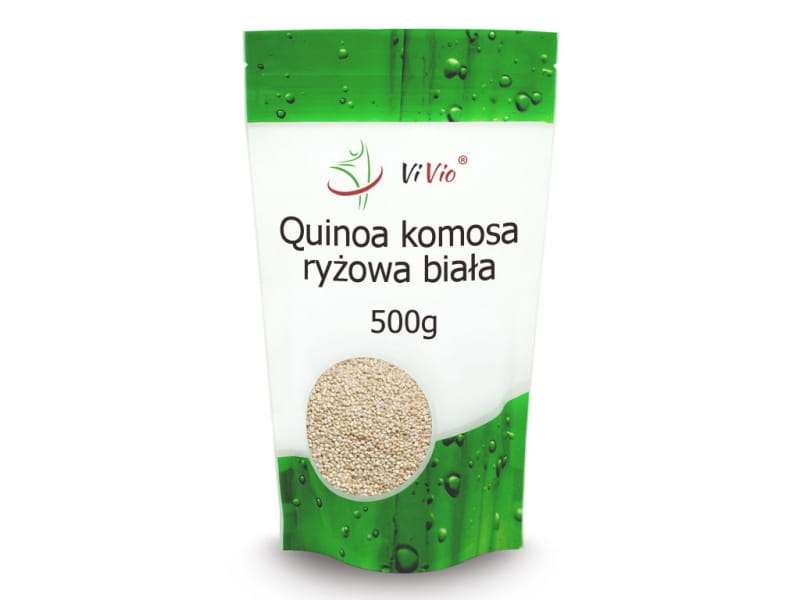
xQuinoa - what does it taste like?
Quinoa has a characteristic sweet taste, making it ideal for preparing main dishes as well as desserts.
White quinoa is widely used in everyday cooking. Soft-boiled, it can be a great addition to meat or fish dishes. Thanks to its swelling properties, it can also be an excellent thickener for sauces and soups full of vegetables. It's also worth noting that this product is excellent in healthy desserts. It can be used to make both nutritious pudding and crispy biscuits. In addition, quinoa (cooked in bulk) is an excellent ingredient for tasty salads.
How to cook quinoa? Span >
Dry quinoa grains should be rinsed well under running water. Then cook for 10-15 minutes. Quinoa is cooked in a ratio of 1:2 (1 cup of quinoa, 2 cups of water).
Ingredients: white quinoa

"Reference intake for an average adult
< p> (8,400 kJ / 2,000 kcal)”. Product may contain: soy, gluten, mustard, nuts and sesame seeds.
< / em>
Komosa has a unique amino acid composition. No other plant contains such a beneficial set of essential amino acids. The protein content ranges from 12 to 22%. It is an easily digestible protein, and interestingly, the heat treatment process, i.e., cooking, further increases its digestibility. Therefore, quinoa is an ideal source of valuable protein in the diets of vegetarians, children, pregnant women, and the elderly.
It is worth paying attention to the content of unsaturated fatty acids (linoleic and oleic), in addition "protected" against oxidation thanks to a large amount of antioxidant vitamins, mainly A and E. In addition, quinoa is a good source of B vitamins, folic acid, minerals: magnesium, potassium and calcium, as well as phytosterols, saponins and phenols. < /p>
Quinoa differs from other pseudocereals in its flavonoid content. Quinoa contains 58 mg/100 g, which is twice as much as cranberries. This is a valuable and unique characteristic, as cereals generally do not contain flavonoids.
Quinoa also contains fiber, especially inulin. As a result, it has a strong prebiotic effect and can be recommended as a dietary measure for people with poor microflora in the digestive system. In turn, thanks to its saponin content, it can exhibit anti-allergic, anti-inflammatory, antifungal, antiviral, and immunostimulating effects.
Delivery Fee
x


- Choosing a selection results in a full page refresh.